
Process engineering services for better plant performance
Whether you are upgrading an existing plant, planning new capacity or changing how you use energy, your next step needs a clear technical and commercial basis. Alcheemika brings process engineering, decarbonisation and digital tools together to help you assess the options and carry the chosen plan through to operation.
Brownfield engineering and asset repurposing
Before replacing a plant or major unit, understand what existing assets can still deliver. Suitable brownfield projects may offer the potential for 30–50% lower capital costs and delivery 12–18 months sooner than a comparable greenfield build. These indicative opportunities depend on asset condition, scope, approvals and shutdown planning, and require project-specific assessment.
Our work includes as-built 3D scanning, process modelling, materials checks, utility balancing and phased revamp planning. For refineries and petrochemical plants, this can include assessing hydrotreaters and cracking units for renewable or circular feedstocks.
Recover capacity and reduce operating costs
A bottleneck may sit in a pump, compressor, catalyst bed or separation system rather than the main vessel. We use flow and pressure analysis, equipment reviews and process simulation to find the constraint and compare ways to remove it. Reusing equipment is considered where its condition and performance allow.
What you receive
- A model of the existing plant and its operating limits.
- A bottleneck, equipment and utility capacity assessment.
- Feedstock compatibility and materials reviews.
- A phased revamp scope with cost estimates, tie-in requirements and shutdown planning.
Greenfield engineering and new process scale-up
Moving from an idea or pilot unit to a commercial plant raises questions about performance, cost and reliability. For first-of-a-kind projects, these questions need attention early.
We develop and check material and energy balances, equipment sizing, utility requirements and operating scenarios. We assess scale-up risks using the available test data, identify where further evidence is needed and prepare the design basis for the next investment stage.
What you receive
- Feasibility and technology selection studies.
- Validated process models and clearly stated scale-up assumptions.
- FEL, BDEP and FEED packages appropriate to the project stage.
- Capital and operating cost assessments with sensitivity analysis and an agreed estimate basis.
Energy optimisation and industrial decarbonisation
Lower energy use is often a useful starting point for cutting both operating costs and emissions. We assess the whole plant so that an improvement in one unit does not create an avoidable problem elsewhere.
Use heat more effectively
Pinch analysis matches available heat with process needs. In suitable plants, heat integration may offer the potential to reduce thermal energy demand by 15–30%, subject to the baseline and practical recovery opportunities. We assess exchanger networks, steam and condensate, heat pumps and mechanical vapour recompression where the process and economics support them.
Compare electrification and fuel switching
We assess electric boilers, thermal storage, electric heating elements and suitable furnace retrofits against your power supply, operating profile and costs. Hydrogen and other fuel changes are checked for combustion behaviour, emissions, materials compatibility and safe operation. Specialist options such as plasma heating are considered only where the application and evidence support them.
Build a commercial case for lower emissions
Energy transition can support competitiveness through lower costs and resilience through more flexible energy and feedstock choices. We assess supply, prices, carbon exposure and product demand to bring greater certainty to the commercial case.
Where relevant to your products and markets, the assessment can include EU Emissions Trading System costs and Carbon Border Adjustment Mechanism requirements. Potential finance incentives and low-carbon product premiums are assessed against eligibility and market evidence.
What you receive
An energy baseline, heat integration opportunities, electrification or fuel-switching options, and a phased plan with costs, dependencies and expected benefits.
Sustainability built into the engineering
Carbon, energy, water and materials need to be considered together. We begin by reducing demand, integrating processes and recovering useful resources. We then assess electrification, alternative inputs, water reuse and carbon capture where they add value.
For renewable and circular fuel projects, we help define the measurements, material balances and operating records needed for lifecycle emissions assessment and renewable-content verification. This can include plant control-system records and biocarbon testing arrangements with qualified laboratories.
Applicable requirements may include the EU Renewable Energy Directive, co-processing rules and ICAO CORSIA requirements for aviation fuels. We prepare engineering inputs for the relevant assessment; certification and independent verification remain separate steps.
For bioenergy with carbon capture and storage, we assess capture integration, utility demand and the evidence needed to evaluate potential carbon removals. A negative-emissions claim depends on the full lifecycle balance and verified permanent storage.
Process simulation and digital engineering
A model helps you test an idea before trying it on the plant. We build steady-state and dynamic process models to assess new operating conditions, equipment changes and feedstocks. Model limits and assumptions are made clear, especially where operating data is limited.
For used cooking oil, pyrolysis oils and other variable inputs, we examine the process behaviour that matters to the design. This may include reaction rates, heat release, hydrogen demand, product yields and downstream capacity.
Monitor performance with useful plant data
We reconcile process measurements with material and energy balances to identify performance drift and unreliable data. Digital twins, energy dashboards and predictive models can then help your team investigate losses and plan maintenance. AI-assisted analysis is used where data quality and validation support it.
3D laser scanning serves a different need: an accurate view of the physical plant. It supports layout checks, equipment fit and tie-in planning, helping reduce clashes before installation.
Plan modular construction where it fits
Factory-built, tested modules can reduce work on a live site. We assess modular options for suitable e-methanol units, hydrogen connections and bio-feed injection systems, including transport, access, utilities and integration with existing equipment.
What you receive
Process models, a digital monitoring scope, 3D asset information where required, virtual commissioning plans and modular design options matched to your project.
Process troubleshooting and operating support
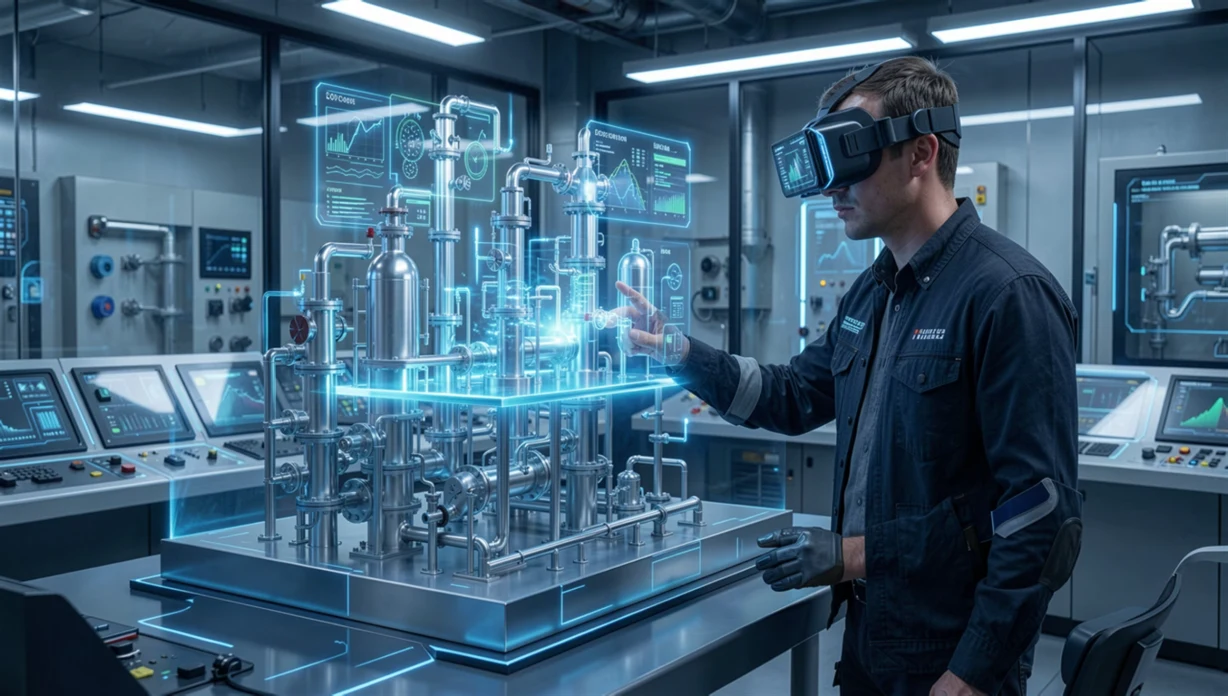
When a plant loses capacity, consumes more energy or becomes harder to control, the first task is to find the cause. We combine operating data, process models and equipment reviews to define the problem and assess a practical remedy.
- Hydroprocessing temperature control. Review heat release, quench distribution and catalyst arrangements when feeds or operating conditions change.
- Corrosion and materials. Assess acid corrosion and other compatibility risks, then evaluate suitable materials and operating changes.
- Cracking unit performance. Investigate coking, product yield shifts, feed distribution, compressor limits and separation capacity.
- Plant stability. Check utility constraints and control strategies across normal operation, start-up and changing loads.
Process safety through every stage
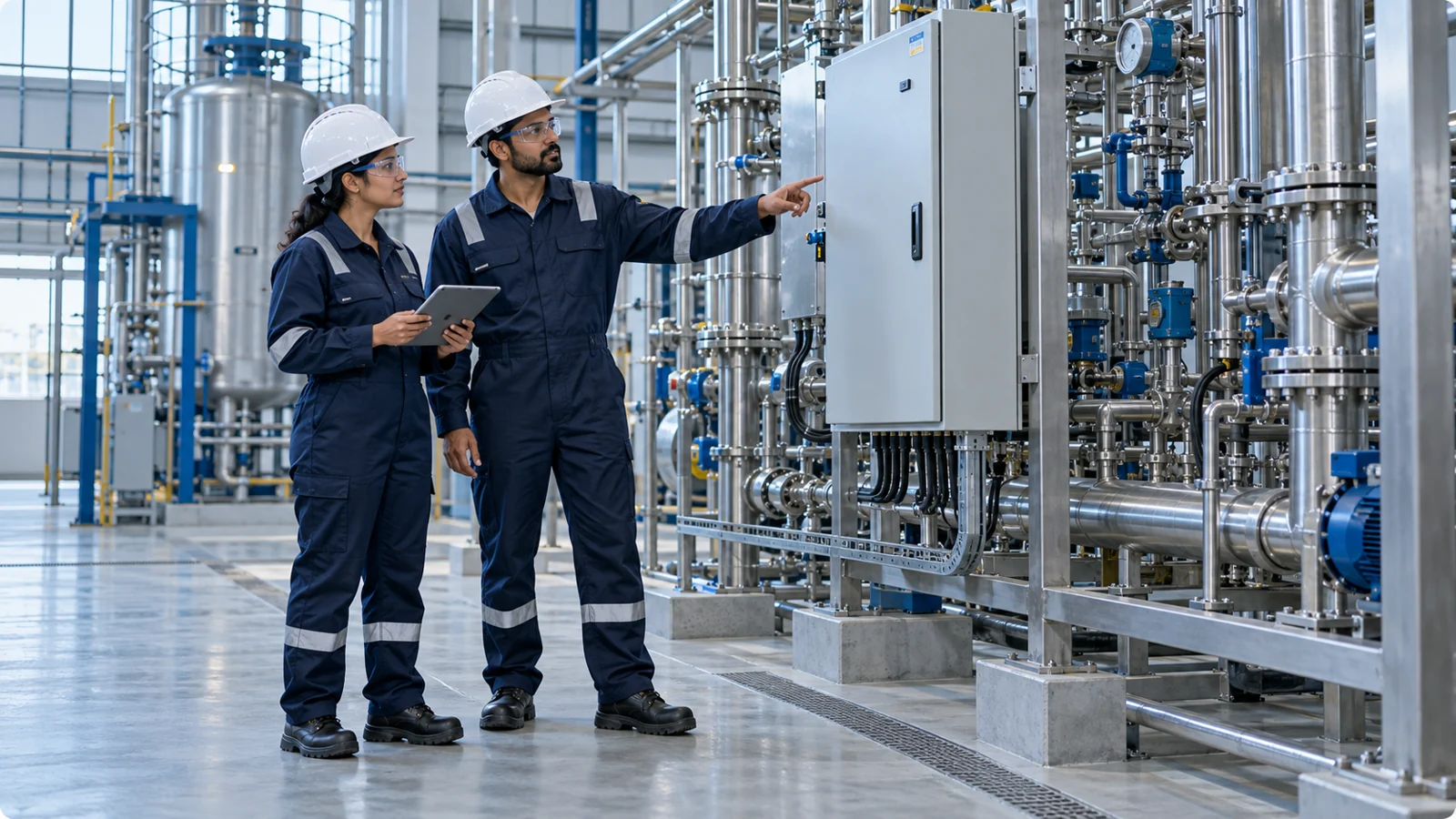
Safety studies sit within the engineering work. HAZOP, LOPA, FMEA and quantitative risk assessments help identify hazards and define safeguards. Reviews cover equipment integrity, pressure relief and control requirements, with applicable standards and regulations agreed for each project.
The Alcheemika FIT framework
FIT means Feasibility, Integrate and Transform. It brings preliminary concept verification, process feasibility studies, integration engineering and implementation into a structured route to plant performance.
FITtoTransform
Is the concept technically feasible, and does it make commercial sense? We verify preliminary concepts and carry out process feasibility studies. Assessments cover reaction behaviour, equipment condition, materials, utilities and product requirements, alongside capital and operating costs. Applications include renewable fuels, bio-circular processes and new process routes.
FITtoSWITCH
What engineering is needed to bring the chosen process or upgrade into operation? We develop integration engineering for equipment, process units, utilities and controls. The scope can include alternative feedstocks, hydrogen integration and electrification, assessed against operating limits, safety and supply conditions.
FutureFIT
We help turn the engineering into practical plant changes through the agreed implementation and commissioning scope. The aim is to help the transformed plant perform against its production, cost, reliability and efficiency goals, with operating support and performance checks where included.
Engineering evidence for your investment decision
Your board and project partners need to understand the scope, costs, risks and remaining uncertainties. We develop the evidence in stages, so the level of detail matches the decision being made.
FEL 1 concept and screening
Identify the opportunity, resource availability, site constraints and initial technical and commercial options.
FEL 2 option development and pre FEED
Compare process routes, refine balances and assess equipment and utility interfaces. Where scope definition and data support it, an estimate range of ±20% may be targeted; the actual range is agreed against project maturity and the estimate basis.
BDEP and FEED
Develop the basic design engineering package and front-end engineering design. Agreed deliverables can include process flow diagrams, piping and instrumentation diagrams, equipment data sheets, relief design basis, safety studies and procurement specifications. These support the final investment decision and the next stage of engineering.
Detailed engineering through commissioning
Complete the agreed design detail, support procurement and construction, plan tie-ins and test controls through virtual commissioning where appropriate. Owner’s Engineer support and commissioning oversight help your team check installation, start-up and performance against the design basis.
Not sure where to start
Tell us what is on your mind about your plant. We will reply personally, usually with a few questions and a suggested next step.